


Chaucer - The Pardoners Tale
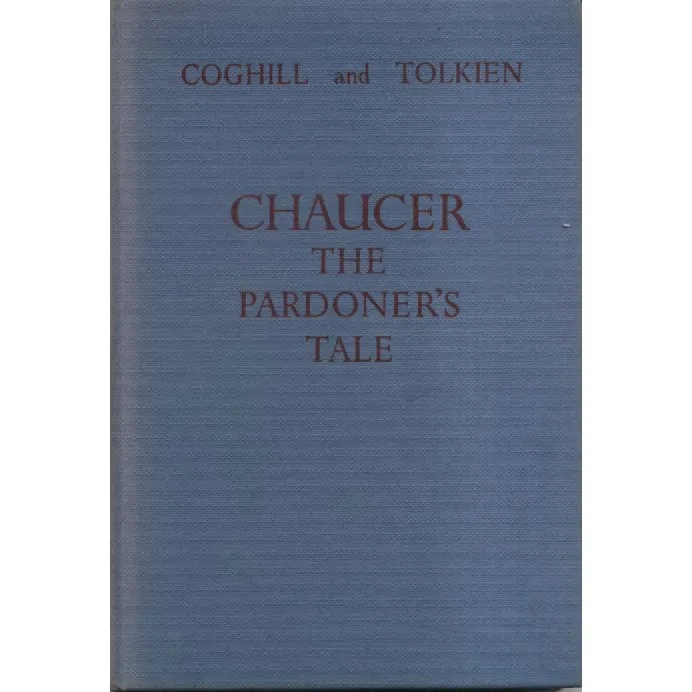
Publisher: George G Harrap
Format: Hardback
ISBN: none
There are moral tales that arrive with a clear lesson, and then there are moral tales that circle the lesson, point at it from several angles, and leave you to decide whether you’ve learned anything at all. Chaucer – The Pardoner’s Tale (1960), edited by Nevill Coghill and Christopher Tolkien and published by George G. Harrap, belongs comfortably in the latter category: a compact but rather pointed slice of medieval storytelling, presented with just enough guidance to keep you moving without removing all of the effort.
The tale itself, nestled within The Canterbury Tales, concerns greed, fate, and the rather unhelpful consequences of pursuing one’s own interests a little too enthusiastically. Chaucer’s characters, as ever, are drawn with a level of observation that feels both precise and faintly knowing, as though he had met them before, possibly more than once. The narrative unfolds with a steady confidence, building towards a conclusion that is both inevitable and, in its own way, quietly unsettling.
Coghill and Tolkien step in to assist, providing the necessary editorial framework to bridge the centuries between Chaucer’s language and the modern reader’s expectations. Glosses and notes appear where required, offering clarification without insisting upon it, and the overall effect is one of guided engagement rather than simplified consumption. It is, in other words, a text that expects you to participate, even if only by keeping up.
Published in 1960, this Harrap edition carries the familiar hallmarks of mid-century educational publishing: solid, practical, and entirely unconcerned with whether it might be considered light reading. This particular copy is listed as Good, which in Crappy Old Books terms suggests it has been opened, handled, and perhaps read with a degree of determination. The cover may show some wear, the spine may have softened, and the pages may carry the faint signs of previous readers who may have paused, reconsidered, and then pressed on regardless.
It is not a volume that demands to be read in one uninterrupted sitting, though it can be, given its relatively modest length. More often, it will be approached in stages, revisited, and occasionally set aside when the accumulation of unfamiliar phrasing becomes just a little too noticeable. Whether you come to it as part of a broader engagement with Chaucer or simply out of curiosity about one of his more pointed tales, it offers a reading experience that is both structured and quietly thought-provoking.
A carefully presented medieval narrative that manages to be both accessible and faithful to its origins, and a perfectly respectable way to suggest that your reading habits extend into territory where stories carry lessons, language carries history, and the outcome is rarely as straightforward as it first appears.
Keep browsing: See more Medieval Classics books Other books by Nevill Coghill and Christopher Tolkien
